

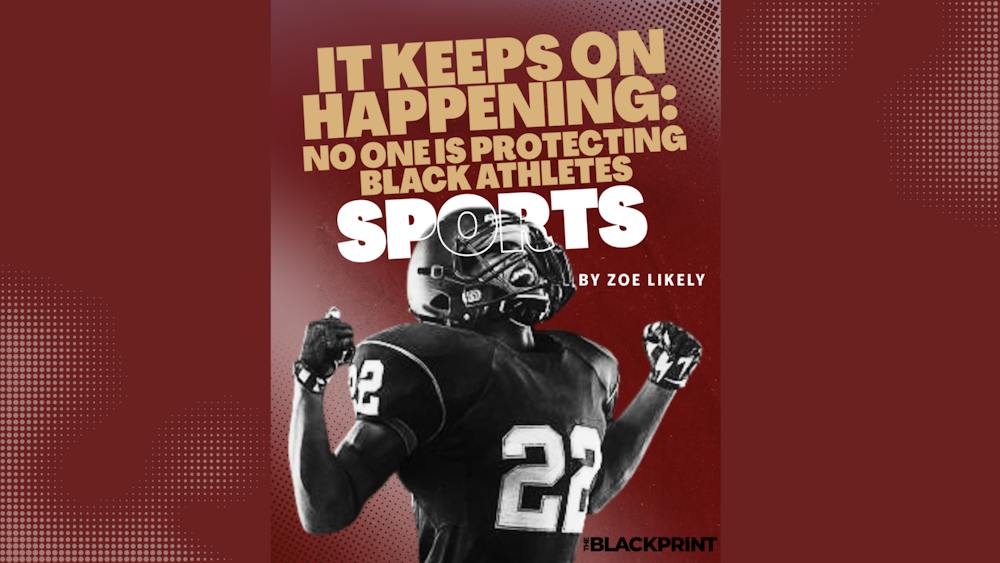
In October alone, racist remarks towards Black athletes popped up all over the country at the high school, college, and professional levels. This continues despite Black athletes dominating the sports industry, bringing revenue and traction to these teams.
In Colorado Springs, two football teams forfeited games against Lutheran High School, a school that has made racist comments towards opposing teams’ Black players and cheerleaders. Elizabeth Hernandez, a reporter for the Denver Post, states, “Lutheran students and community members made racist comments and gestures, including calling Black cheerleaders ‘Harriet Tubman,’ using racial slurs, whipping belts in their direction, and telling them to “go back to where they came from.’” While two teams already forfeited their games, the Lutheran football players have not faced any repercussions thus far and will play their next game at the end of the month.
Alternatively, the University of Maryland’s women’s tennis team has been suspended after creating racist imagery targeted at the Howard women’s tennis team. Mike Hellgren, a reporter for CBS Baltimore, explained that the posters depicted images of the Ku Klux Klan hoods inserted into the Maryland flag.
Finally, the Vikings Defensive Coordinator, Brian Flores, filed a lawsuit against the National Football League, accusing the NFL of racial stereotyping and discrimination in the recruiting process for players and coaches. The Guardian reports that two other coaches, Ray Horton and Steve Wilks, joined this lawsuit.
Three separate reported incidents of racism all within the same month. And in each of these incidents, leadership from these organizations responded in the same manner. “We do not condemn racism,” “we sincerely apologize to anyone who was hurt,” “this is not something that aligns with our values.” Maybe this is all true; however, it keeps happening. These incidents display how sports lovers view black athletes as entertainment. They play in games, win tournaments, win championships, bring revenue to the organization or school, and in return, they get racism, threats, and disrespect.
70% of players in the NFL are Black. Comparatively, 9% of coaches in the NFL are Black. The Black community is admired for their talent and ability to bring viewership to the league. However, when it comes to leadership on those same teams, suddenly their talent doesn’t get them that far.
The harsh reality is that the majority of white people, specifically in sports, cannot define racism. We see this time and time again. The Maryland women’s tennis team had black players. The girls who created the racist imagery played on a team with Black players, bonded with them, even got dinner with them. But despite that, they still found themselves superior because they were not black. And because so many align racism with complete alienation from black people, these systems continue to be enforced.
Again, these are instances of racism that made headlines. So many cases go unreported because players feel like a burden. At this point, no one is immune to racism in sports. Players, coaches, and supporting staff are all vulnerable. The protection has to come from the institutions themselves. The NFL, the CPF Committee, and the school districts must protect their players and staff. However, considering the common trend of these institutions protecting the brand and sacrificing the players, a revolution in sports might need to happen.
